Every time someone operates in a hazardous environment without proper protections, they are exposed to big risks.
According ILO data, 2.93 million people die every year due to work-related factors.
Among the causes are both unforeseeable events, and voluntary operational decisions: not wearing the helmet due to heat, taking off gloves for a better dexterity or taking off the respirator mask.
This equipment represents the last physical barrier between the operator and risk factors. Knowing which are the main ones and how to verify their compliance is essential to work effectively in a plant.
WORKING AT DE NORA
For De Nora the safety of its people is crucial: do you want to join the team?
1. What is the main PPE?
When it comes to taking preventive measures in the workplace, the company is responsible for providing the right protection. What are the main PPE items?
- Head protection
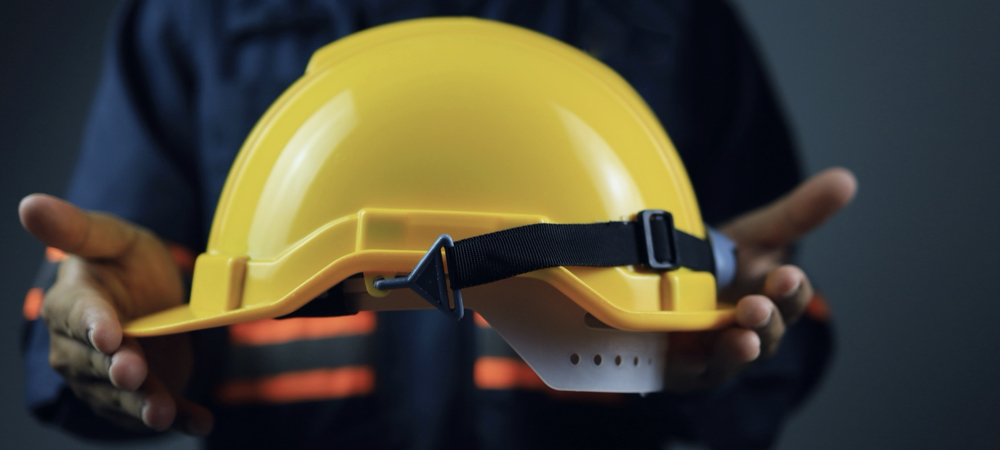
The safety helmet is designed to absorb the energy from an impact, protecting the head from falling objects, impacts against fixed obstacles and, in some cases, electrical contact or molten metal splashes. Helmets are divided into:
- safety helmet: with a rigid shell and internal suspension system to absorb impacts;
- bump cap: they only protect against impacts with fixed objects (e.g. low assembly lines), but not from falling objects.
-Hearing protection
Prolonged exposure to noise above 80–85 dB can permanently damage the ear’s hair cells. Choosing the right protection depends on the level of attenuation needed and compatibility with other PPE. Examples include:
- earplugs: made of foam or silicone and inserted into the ear canal;
- earmuffs: they fully cover the ear, ideal for intermittent or very high noise exposure.
- Eyes and face protection:
Eyes are exposed to three types of risks: mechanics (splinters), chemical (splashes) and optic (UV/IR radiation). Protection includes:
- temple safety glasses: they are a basic protection against low energy frontal impacts;
- safety goggles: they fit snugly to the face and seal the eye area; they are essential against fine dust, gases, and chemical splashes;
- face shields: essential for risks such as electric arc exposure or molten metal splashes.
- Airways protection:
- face masks (FFP1, FFP2, FFP3): They can be single-use or reusable and only protect against particulates (dust, smoke, mist);
- half masks and full face masks: they use replaceable filters, specific for gases (activated carbon) or combined (gases and dust);
- self-contained breathing apparatus: they isolate the operator from the external environment in case of oxygen deficiency or highly toxic pollutants.
- Hand protection: hands are the parts of the body most exposed to accidents (cuts, abrasions, and chemical burns are everyday occurrences). Gloves are classified according to specific EN standards and are associated with specific types of risks:
- mechanical risk (EN 388): they are resistant to abrasion, blade cuts, tearing, and puncture;
- chemical risk (EN 374): they act as a barrier against permeation by specific chemicals;
- rhermal risk (EN 407): they protect from heat due to contact, convection, or radiation.
-Foot protection
Safety footwear is not only designed to prevent toe crushing, but also to reduce the risk of slips and punctures. It consists of:
- reinforced toe cap, capable of withstanding an impact of 200 Joules (equivalent to a ~20 kg weight falling from 1 meter);
- puncture-resistant sole, featuring a plate (metallic or textile) that prevents nails or glass from penetrating the sole;
- antistatic and slip-resistant sole, essential in environments with oils, grease, or a risk of explosive atmospheres.
2. The risks of not wearing PPE
Global data by the ILO show that the overall economic cost of the “lack of safety” amounts to 4% of global GDP.
PPE is not the only relevant element, but their absence or incorrect use is one of the main factors in accident analyses.
Eye injuries are a clear example. NIOSH (National Institute for Occupational Safety and Health) estimates that every day around 2,000 workers in the U.S. suffer eye injuries that require medical attention. The right protection could prevent or reduce the severity of 90% of these cases. However, a survey carried out by the Bureau of Labor Statistics has shown that nearly 3 in 5 workers who suffered eye injuries were not wearing any protection at the time of the accident. The most common reason? They thought it wasn’t necessary in that specific situation.
The 2024 World Risk Poll by Lloyd’s Register Foundation, conducted in collaboration with the ILO based on data collected across142 countries, confirms that 1 in 5 workers worldwide report having suffered work-related physical injuries in the last two years.
This percentage has remained largely unchanged since 2019.
3. How to determine whether PPE is compliant
Wearing PPE properly is crucial, but there’s one more thing people can do to ensure they’re working safely: knowing how to check if the PPE meets the required standards.
Usually, the company is required to provide adequate PPE, but it’s still useful to make sure that it does.
The first and most important element to check is the compliance mark.
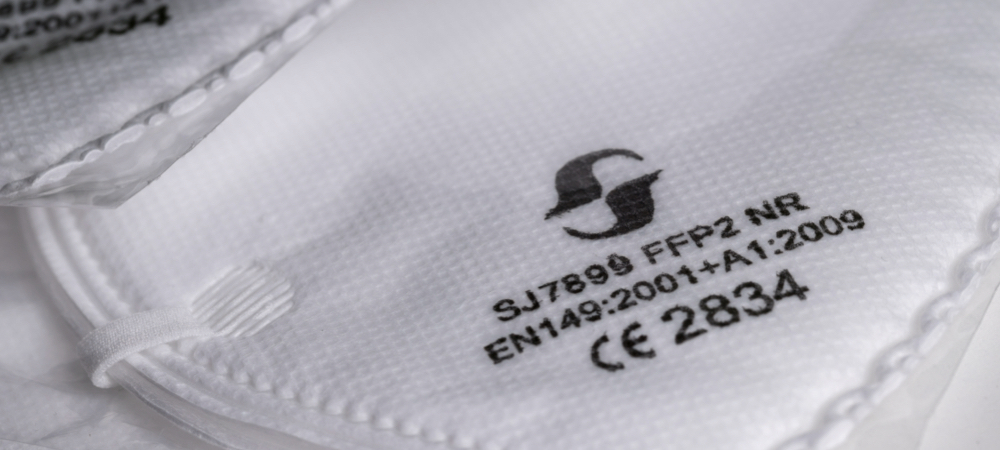
In Europe it’s identified by the “CE” mark which certifies compliance with the essential safety and health requirements, set out in Regulation (EU) 2016/425. The mark must be visible and permanent on the product or on the label.
The marking varies depending on the region: for example, in the Eurasian Economic Union (EAEU) it is “EAC” (Eurasian Conformity); in China, it is “CMA” (China Metrology Accreditation); in the U.S., it can be “OSHA” (Occupational Safety and Health Administration) or “CPSIA” (Consumer Product Safety Improvement Act).
The European label must also include:
- reference to technical standards, such as UNI EN ISO 20345 for footwear or EN 388 for gloves, which define specific levels of protection;
- manufacturer and model identification: the manufacturer’s name and the model identifier must appear on the label to ensure traceability;
- for life-saving devices belonging to Category III, it is important to verify that the CE marking is followed by the identification number of the Notified Body (a four-digit code) that carries out the product checks.
Finally, each item of PPE must be accompanied by an information leaflet which provides details on use, maintenance, and service life.
If this information is missing, the PPE may not be compliant: it is advisable not to use it and to inform your supervisor.
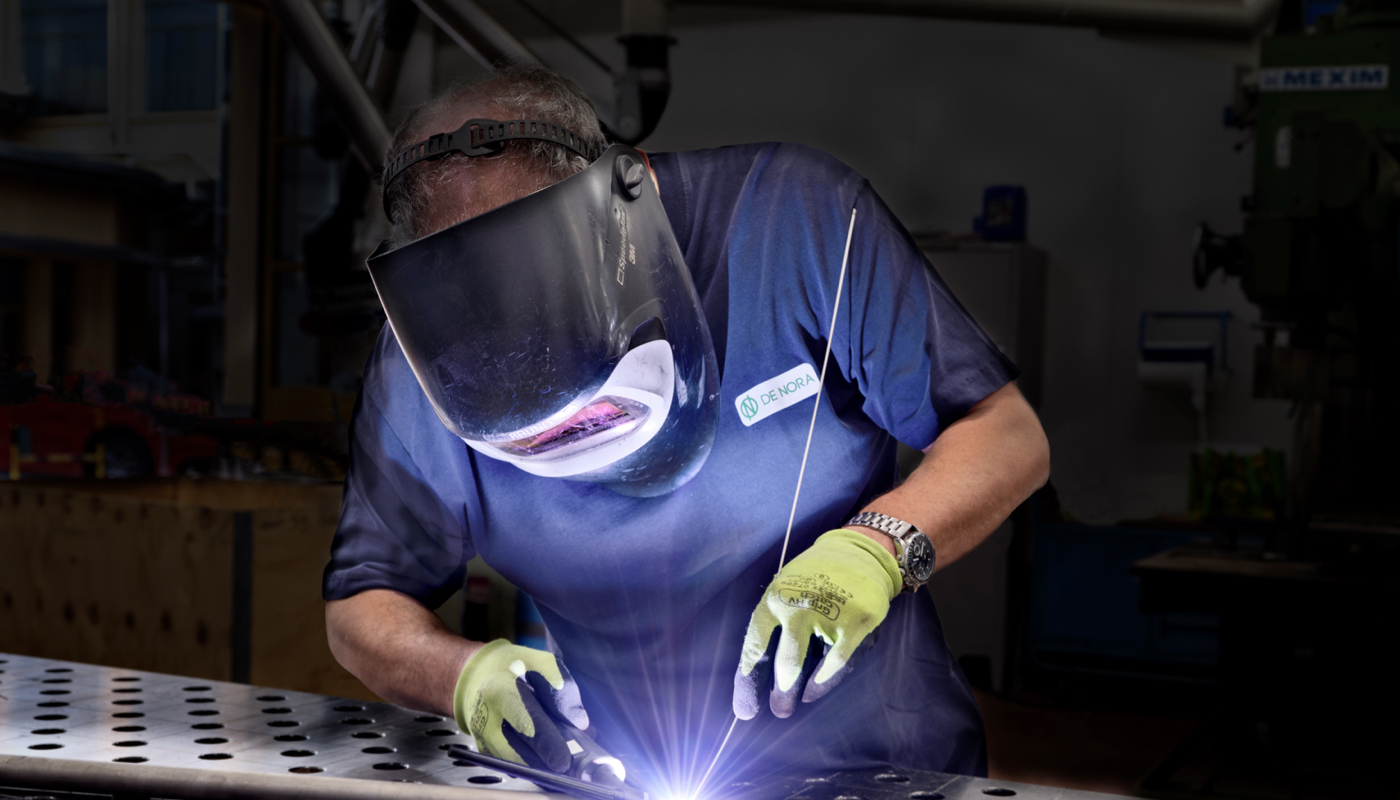
Safety is a team effort: the company must provide guidelines and tools, but everyone also has to play their part in preventing injuries. This commitment includes the proper use of PPE. Knowing the function of PPE or how to verify whether it is compliant is what distinguishes a professional operator. When certified technology meets individual awareness, the risk of accidents decreases significantly
WORKING AT DE NORA